In the north of Córdoba province, there's a tourist circuit that combines the legacy of the Society of Jesus with the productive traditions of European immigrants . If you're in the provincial capital and looking for a full-day getaway, the best option is a trip to Colonia Caroya. It's only 50 kilometers away and boasts three main attractions: the Jesuit estancia of Colonia Caroya , an extensive vineyard route , and a cuisine based on the production of cured meats with Protected Geographical Indication .
In this article, we'll take an in-depth look at how to plan your visit. You'll find information on access routes, driving times, and the location of wineries in Colonia Caroya. We also suggest itineraries and guided tours to help you make the most of your time, as well as the best things to do in Córdoba .
Distance from Córdoba to Colonia Caroya and access routes
Planning your trip is the first step. The distance from Córdoba to Colonia Caroya is 50 kilometers via National Route 9 North. Leaving from downtown Córdoba on Avenida Juan B. Justo , you connect to the highway and then the divided highway. The trip takes between 50 minutes and 1 hour, depending on traffic at the toll plaza near the Juárez Celman bypass.
There is a longer, more scenic route through the Sierras Chicas . Take Provincial Route E-53 from Córdoba to the town of Ascochinga , then turn east onto Provincial Route E-66 for 18 kilometers . This route is 75 kilometers long and takes approximately 1 hour and 40 minutes to drive.
The Córdoba bus terminal offers regular intercity bus services from companies such as Fonobus and Ersa. Buses depart every hour and complete the journey in approximately 1 hour and 15 minutes , entering via the city's main avenue.
Jesuit Estate of Colonia Caroya: a journey to the 17th century
The Jesuit estancia of Colonia Caroya was the first agricultural and livestock establishment organized by the Society of Jesus in the province, founded in 1616. Its original objective was to financially support the Convictorio College of Our Lady of Montserrat, located in the capital.
The property is located on the western edge of the city, on National Route 9 (kilometer 748). The architecture of the complex retains its original structure around a large central courtyard . During the tour, you can see the chapel, the old dams, the mill, and the rooms .
Recommended excursion to the Jesuit Estancias
The best way to understand the scale of the Jesuit missions' productive and religious system is to visit them together. The Jesuit Missions package in Santa Catalina, Colonia Caroya, and Jesús María offers a full-day historical itinerary. It begins with hotel pickup in Córdoba city, and the first stop is at the Colonia Caroya Mission .
The tour continues to the Estancia de Jesús María , famous for having housed the region's first winery. Finally, a 14-kilometer rural road leads to the Estancia de Santa Catalina (1622), the largest complex in the group, notable for its imposing colonial Baroque-style church.
Wineries in Colonia Caroya
If your main interest is wine and you prefer not to drive, the Wine Route tour of Colonia Caroya wineries organizes all the logistics along Avenida San Martín. This 9-kilometer-long avenue was settled by Italian families who began cultivating vines after their immigration in the late 19th century.
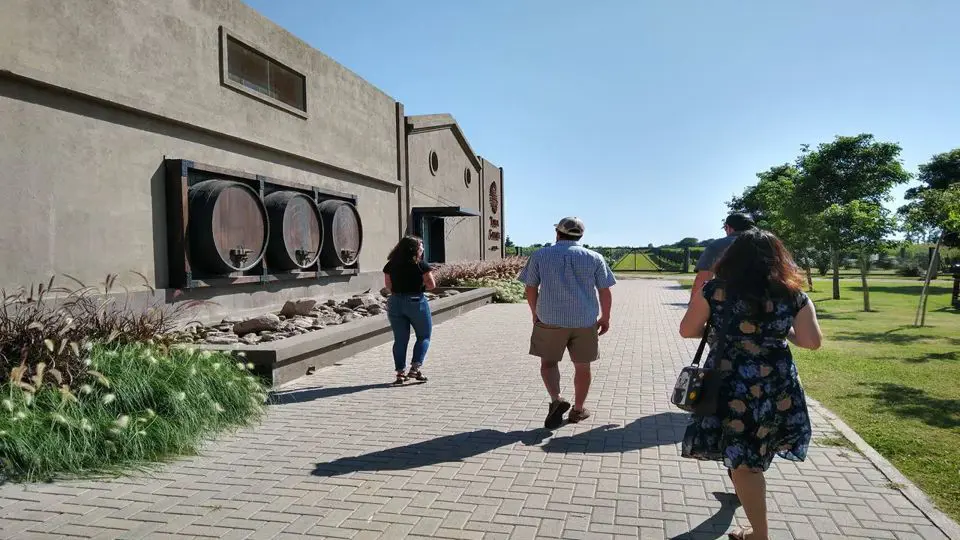
The half-day itinerary includes direct transfer from the city of Cordoba to the production area and a visit to two wineries with different profiles:
Bodega La Caroyense: Located at Avenida San Martín 2281, it is one of the oldest wineries in the province (founded in 1930 as a cooperative). Its guided tour explains the large-scale winemaking process and the history of sparkling wines from Córdoba.
Terra Camiare: Located at 505 Santos Nóbile Street. It is an establishment that revolutionized local winemaking, focusing on high-end wines using grape varieties such as Malbec, Cabernet Franc and the traditional Isabella, processed with state-of-the-art technology.
Chacra de Luna: An agroecological enterprise and boutique winery located in a rural area (Pedro Patat Sur street). Here, the focus is on organic production, allowing visitors to tour orchards and vineyards and taste limited-production wines.
At each stop, a winemaker or local guide explains the harvesting, fermentation, and bottling process . The experience culminates in a guided tasting of regional wines, paired with local charcuterie and cheeses .
Jesús María and Colonia Caroya: connected cities
Colonia Caroya and the city of Jesús María form a single urban area. They are separated only by National Route 9 and San Martín Avenue, making it possible to visit the attractions of both towns in a single day.
While Caroya contributes the culture of wine, salami and Italian influence, Jesús María contributes the gaucho tradition and is home to the National Festival of Horse Taming and Folklore in January of each year.
If you want a complete experience in northern Córdoba, your best plan is the Jesús María and Colonia Caroya day trip package. It begins with a journey along Route 9 North and is divided into two parts. In Jesús María, you'll visit the José Hernández Amphitheater and the Jesuit Estancia of San Isidro Labrador.
The tour then crosses into Colonia Caroya, passing through the tree-lined Avenida San Martín, visiting a traditional winery, and stopping at charcuterie factories. The excursion includes free time for lunch at local restaurants before returning to Córdoba.
Gastronomy: the Salame of Colonia Caroya
Beyond wine and architecture, the town is nationally recognized for its cured meat production. In 2013, Colonia Caroya Salami obtained the Geographical Indication (GI) seal . Certification guarantees that the product is made according to a strict and specific recipe from this region.
The traditional Friulian recipe calls for a precise ratio: 52% beef, 21% pork, and 27% bacon. It is seasoned with salt, pepper, garlic macerated in wine, and nutmeg. The drying process takes place in cellars that maintain the region's constant temperature and humidity.
Along San Martín Avenue and in the surrounding streets, you'll find plenty of delicatessens and family-run restaurants offering generous platters of snacks. Besides cold cuts, the local cuisine is known for its homemade pasta, especially macaroni, sorrentinos, and white polenta .
When to visit Colonia Caroya: 3 key dates
Visiting the city during its popular festivals is the best way to experience its culture at its finest:
March: National Grape Harvest Festival and Provincial Grape Harvest Festival. The streets are filled with parades and traditional grape treading.
July: Caroyense Typical Food Festival, ideal for tasting white polenta and pasta in large community dining halls.
October: National Homemade Salami Festival, the most important gastronomic event in the region.
Published by Has Chacon on 24/04/2026